

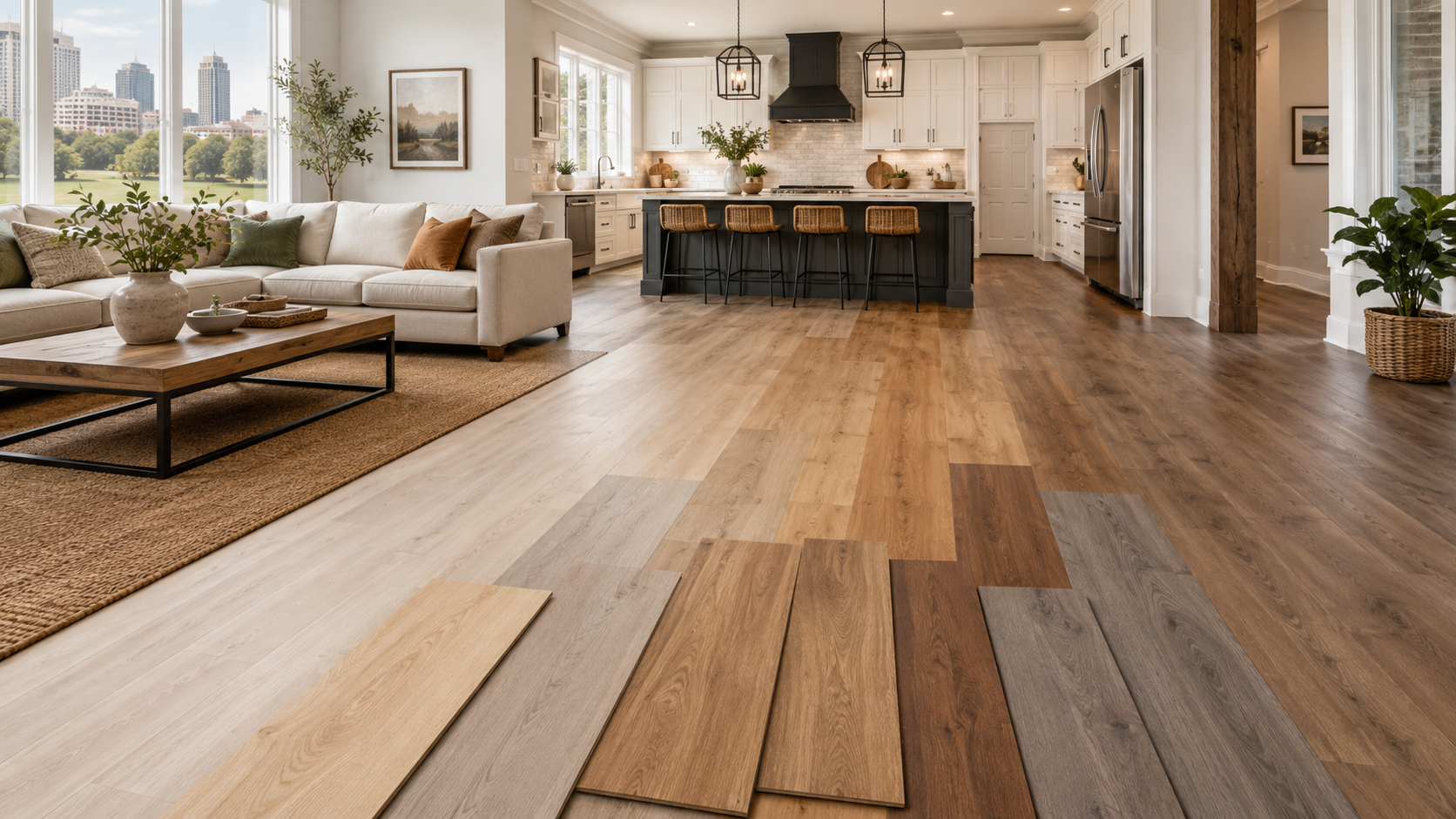
If you’re replacing floors in a Tulsa home this year, color is doing more than setting the mood. It can make a room feel brighter, warmer, larger, calmer, or more grounded. It also influences how easily your flooring works with cabinets, wall colors, furniture, and future design updates.
In 2026, the strongest laminate color direction is warm and natural. Industry trend reporting points toward midtone woods, natural oak, honey, sand, greige, and other brown-based neutrals, while cool gray continues to lose ground. Houzz reported that warm midtones are dominating new flooring collections, and the Association of the European Producers of Laminate Flooring highlighted oak, greige, honey, sand, smoked, and natural wood tones as key laminate directions for 2026.
For Tulsa homeowners, that shift is useful because warm wood looks work across a wide range of interiors, from traditional homes to updated open-plan spaces. At Brücke Flooring, homeowners can compare flooring choices and see how different colors respond to the light, finishes, and furnishings already in their home.
There is no reliable public sales ranking showing the exact best-selling laminate colors in Tulsa, so this is best viewed as a practical look at the color families leading 2026 design and how they can work in local homes.
Why Warm Laminate Colors Are Leading in 2026
The all-gray interior has been fading, and 2026 makes the change especially clear. Current flooring collections are leaning toward warmer neutrals and more realistic wood character. Houzz describes the new direction as warmer overall, with midtones taking a central role and the grays that remain carrying brown undertones rather than the cooler cast associated with earlier trends.
The broader home-design picture supports the same move. Houzz’s 2026 summer trend data showed growing interest in earthy colors such as chocolate brown, taupe, cream, mushroom, and rust. That does not mean every floor needs to be dark or dramatic. It means homeowners are increasingly building rooms around colors that feel comfortable, natural, and layered rather than stark.
Laminate fits that direction well because wood-look designs can recreate a broad range of oak, walnut, chestnut, and weathered finishes. Textured surfaces and grain variation can also give planks a more natural appearance.
The best color is still the one that works with your own home. Natural light, room size, cabinetry, trim, wall color, and adjoining flooring can make the same sample look noticeably different from one house to another.
1. Warm Natural Oak
Warm natural oak is one of the safest places to start if you want a laminate floor that feels current without looking overly trend-driven.
Think balanced beige-brown wood tones rather than strong orange, yellow, or gray. The result is familiar enough for traditional spaces but clean enough for contemporary interiors. Oak remains the dominant laminate design for 2026 according to the EPLF, while Houzz also points to warmer wood looks and midtones across new flooring collections.
Why does it work so well? Warm natural oak sits comfortably between very pale and very dark flooring. It can provide enough contrast against white or cream walls while still coordinating with wood furniture, painted cabinets, stone counters, and warm metals.
In a Tulsa home, consider this color when you want:
A flexible backdrop for changing furniture and décor
A natural look without a strong red or orange cast
Flooring that visually connects living, dining, and kitchen areas
A middle ground between blonde and deep brown floors
Warm oak can also be helpful in open-plan homes because it gives multiple spaces a consistent foundation without dominating the room.
2. Honey Oak
Honey tones are warmer and slightly richer than neutral oak, making them a strong choice for homeowners who want a welcoming, sunlit feel.
The key difference between today’s honey oak and the orange-heavy finishes associated with some earlier interiors is balance. Current trends favor warmth that feels earthy and natural rather than highly saturated. The EPLF specifically identifies honey among the warmer laminate shades shaping 2026, while current laminate collections also include amber, honey, and warm oak-inspired choices.
Honey oak works particularly well with:
Cream or off-white walls
Sage, olive, and muted green
Warm white cabinetry
Beige, tan, and camel upholstery
Brass, bronze, or black accents
It can also bring warmth into rooms with limited natural light. Instead of making a shaded room feel cooler with a gray floor, a honey-toned laminate can add visual warmth throughout the day.
If your home already includes several wood tones, take samples into the room before deciding. Honey flooring does not need to match furniture exactly, but the undertones need to feel intentional together.
3. Warm Greige
Gray is not disappearing completely. It is becoming warmer.
Warm greige blends gray and beige, creating a neutral floor that can bridge cool and warm elements in the same room. That makes it especially useful in homes being updated gradually, where existing gray finishes may need to coexist with newer cream, taupe, brown, or natural wood accents.
The EPLF lists greige among the important 2026 laminate colors, while Houzz notes that the gray floors still appearing in current collections tend to have brown undertones rather than the cooler hues that were more common several years ago.
Choose warm greige if you like a neutral look but do not want the room to feel flat. It can pair well with:
Soft white walls
Taupe or mushroom paint
Black fixtures
Natural wood furniture
Stone or quartz surfaces with mixed warm and cool veining
For Tulsa homeowners who already have gray cabinetry, tile, or furniture, greige can be a practical transition color. It keeps some of that familiar neutrality while moving the overall room in a warmer direction.
4. Sand and Wheat Tones
Sand, wheat, and pale beige wood looks are ideal for homeowners who want a light floor without going all the way to whitewashed.
These colors feel soft and airy, but their warmer undertones help them avoid the washed-out appearance that very pale cool floors can sometimes create. The EPLF includes sand among the natural shades influencing laminate design in 2026, and current manufacturer collections include warm wheat and sand-inspired oak colors.
Light warm flooring can be especially effective when you want to make a smaller room feel more open. It also works well in spaces with limited contrast, where dark flooring might visually weigh the room down.
Consider sand or wheat laminate for:
Smaller living rooms
Bedrooms
Home offices
Hallways
Scandinavian-inspired interiors
Homes with light cabinets and natural textures
One practical point: very light floors can show some dark debris more readily, just as very dark floors may highlight light dust. Looking at a full-size sample in your actual room will give you a better sense of how the color works with everyday living.
5. Medium Walnut and Chestnut Brown
For homeowners ready to move beyond pale flooring, medium brown is making a strong case in 2026.
Houzz reports renewed interest in warm and medium wood tones, including walnut and other richer species, as homeowners shift toward more layered interiors. The broader 2026 design trend also favors deeper earthy colors, with chocolate brown among the faster-rising search terms in Houzz’s summer trend report.
A medium walnut or chestnut-inspired laminate can give a room more depth than blonde or sand flooring without creating the visual weight of a very dark espresso floor.
This color family works beautifully with:
Cream walls
Warm white trim
Olive and forest green
Navy
Leather furniture
Natural stone
Warm metallic finishes
It is especially appealing in living rooms, dining rooms, offices, and larger open spaces where the floor has room to make a stronger design statement.
If you are exploring laminate flooring for a remodel, medium brown is worth comparing alongside lighter oak samples. Seeing both in the actual room can reveal whether the space benefits more from brightness or from added richness.
6. Light Blonde Oak
Light blonde oak remains relevant, even as midtones gain momentum.
Houzz notes that 2026 collections still include plenty of blonde flooring despite the broader move toward warmer midtones. The difference is that today’s lighter looks often feel more natural and less stark, with visible grain, subtle color variation, and textured or lower-sheen finishes helping to add character.
Blonde laminate can be a smart choice when your goal is to keep the room feeling bright and relaxed. It pairs naturally with:
White and light cream
Pale wood furniture
Soft blue or green
Minimalist interiors
Modern farmhouse details
Organic fabrics such as linen
It can also help create continuity between rooms where you want a clean, open feeling.
The main consideration is undertone. A blonde floor can lean warm, neutral, or slightly cool, so compare it against your cabinets and paint rather than choosing based on the sample name alone.
7. Smoked Brown and Deep Espresso
Dark floors are not the dominant direction in 2026, but they are finding a place again in more selective, sophisticated applications.
Houzz’s 2026 design coverage points to renewed interest in deeper stains and richer wood tones as homeowners embrace more depth and warmth in interiors. Recent flooring design coverage has also noted a return of espresso-colored floors when they are updated with lower-sheen finishes and visible wood character.
For laminate, smoked brown, deep walnut, or espresso-inspired looks can bring contrast and drama to the right room. They tend to work best where there is enough natural or artificial light to keep the space from feeling closed in.
Dark laminate can be striking with:
Light walls
Cream upholstery
Warm stone
Brass or bronze details
Rich green or blue cabinetry
Large windows
Think carefully about maintenance expectations as well. Dark floors can make pale dust, pet hair, and certain marks more visible. That does not make them a poor choice, but it does make lifestyle part of the color decision.
How to Pick the Right Laminate Color for Each Room
Trends are useful for narrowing your options, but your room needs to make the final decision.
Living Rooms
Living rooms often benefit from warm natural oak, medium brown, or greige because these colors create a comfortable base for furniture and changing décor.
If the space is large and bright, a richer walnut or smoked tone can add depth. In a smaller living room, sand, wheat, or blonde oak can help keep the space visually open.
Kitchens
Start with the cabinets and countertops.
White or cream cabinetry gives you plenty of flexibility, from honey oak to medium walnut. If your cabinets are already a strong wood tone, choose flooring that complements rather than closely imitates them. A little contrast usually looks more intentional than two wood patterns that nearly match.
For gray cabinets, warm greige flooring can help connect existing cooler finishes with warmer 2026 design choices.
Bedrooms
Bedrooms usually suit softer colors that create a relaxed atmosphere. Natural oak, wheat, light blonde, and warm greige can all work well.
A darker floor can also create a cozy feel in a larger bedroom, especially when balanced with lighter walls, bedding, and window treatments.
Entryways and Busy Family Areas
Color matters practically in high-traffic spaces. Very dark or extremely pale floors may make certain dust, marks, or debris more noticeable.
Midtone oak, honey, greige, and medium brown can offer a forgiving visual balance. Product performance matters here too, so compare wear ratings, care instructions, and moisture-resistance features alongside color.
Match the Floor to the Whole Home, Not Just the Sample
A flooring sample is only the starting point.
Take it into the room and look at it in morning light, afternoon light, and under your normal evening lighting. A greige plank that appears neutral under showroom lighting may look warmer or cooler once it is beside your cabinets and walls.
Also consider adjoining rooms. If hardwood, tile, or another flooring material meets the new laminate at a doorway, the colors do not have to match, but they need to relate comfortably.
A few useful questions can simplify the decision:
Is the room naturally bright or relatively shaded?
Do the walls lean warm or cool?
Are the cabinets painted or wood?
What colors already dominate the furniture?
Will the floor continue through several connected rooms?
Do you want the flooring to blend in or become a design feature?
Are you likely to repaint or replace furniture within the next few years?
The answers can steer you toward a lighter neutral, a versatile midtone, or a richer statement color.
Choose a Color You Will Still Enjoy After the Trend Moves On
A floor lasts far longer than a seasonal décor trend. That is why the strongest 2026 colors have broad appeal: warm oak, honey, sand, greige, blonde, and medium brown are rooted in natural materials rather than novelty.
Current trend data can give you direction, but it does not need to dictate your home. The goal is to find a laminate color that looks beautiful now and still works when you repaint a room, update your furniture, or change your décor later.
Brücke Flooring’s approach is built around helping homeowners make those decisions with clear communication, knowledgeable guidance, and careful attention to the finished result. You can compare colors, consider how each option fits the room, and choose a floor with both appearance and everyday living in mind.
If you are ready to compare laminate colors for your Tulsa home, get in touch with the Brücke Flooring team for personalized help choosing a look that fits your space and style.


