

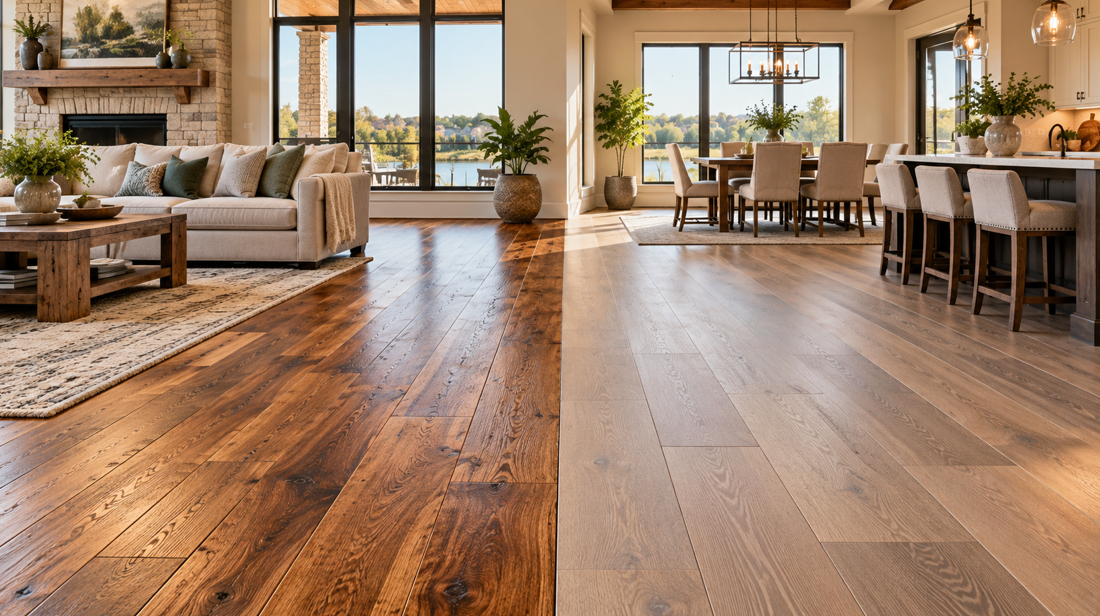
Hardwood floors bring warmth, character, and lasting value to any home. In Jenks, where you will find everything from established neighborhoods near Main Street to newer homes along the river, hardwood remains one of the most requested flooring choices. But before you choose a color or plank width, there is a bigger decision to make: solid or engineered hardwood?
At Brucke Flooring, hardwood is our specialty. We install, repair, and refinish hardwood floors across the Tulsa metro, and we help Jenks homeowners make this choice every week. In this guide, we explain the differences and help you decide which option fits your home.
What Is Solid Hardwood?
Solid hardwood is milled from a single piece of wood, usually about three-quarters of an inch thick. It has been used in homes for generations, and with good care, it can last a lifetime.
Benefits of Solid Hardwood
Can be sanded and refinished many times, often over several decades
Classic, authentic feel underfoot
Adds strong resale value
Available in many species and widths
Things to Consider
Solid wood expands and contracts with humidity changes.
It is usually installed over a wood subfloor, not directly on concrete slabs.
It is not recommended for basements or below-grade spaces.
What Is Engineered Hardwood?
Engineered hardwood has a real hardwood top layer bonded to a stable, cross-layered core of plywood or high-density fiberboard. The top layer is genuine wood, so it looks and feels like solid hardwood.
Benefits of Engineered Hardwood
Greater stability through humidity and temperature changes
Can be installed over concrete slabs, which are common in Jenks homes
Often compatible with radiant heating
Available in wide, long planks that stay flat
Things to Consider
The number of times it can be refinished depends on the thickness of the top layer.
Lower-quality products may have very thin wear layers.
How Oklahoma Weather Affects Your Choice
Jenks sees hot, humid summers, cold winters, and dramatic seasonal swings. Wood responds to these changes by expanding when humidity rises and shrinking when air gets dry.
For solid hardwood, this can mean:
Small gaps between boards in winter
Slight cupping during very humid months
Engineered hardwood handles these swings much better because its cross-layered core resists movement. For many Jenks homes, especially those built on slabs, engineered hardwood offers the best balance of beauty and stability.
Comparing Solid and Engineered Hardwood
Appearance
Both look like real wood because both are real wood on the surface. Engineered options often come in wider planks, which are very popular in 2026.
Durability
Durability depends mostly on the species and finish. Hard species like white oak and hickory perform well in either format.
Refinishing
Solid hardwood can be refinished more times. Engineered hardwood with a thick wear layer (3mm or more) can typically be refinished once or twice.
Installation
Solid hardwood is nailed to a wood subfloor. Engineered hardwood can be nailed, glued, or floated, which gives it more flexibility in different rooms.
Cost
Prices overlap. Wide plank engineered hardwood and premium solid hardwood are often similar in cost once installation is included.
Popular Hardwood Trends for Jenks Homes in 2026
Wide plank white oak for a clean, open look
Warm natural tones like honey, wheat, and soft brown
Matte and low-sheen finishes that hide wear
Wire-brushed textures for subtle character
Herringbone and chevron patterns in entryways and dining rooms
You can browse species, widths, and finishes in our hardwood flooring collection, or visit our Tulsa showroom to compare solid and engineered samples side by side.
Which Is Right for Your Jenks Home?
Choose Solid Hardwood If:
Your home has a wood subfloor
You plan to stay for many years and want to refinish over time
You love the traditional feel of full-thickness boards
Choose Engineered Hardwood If:
Your home is built on a concrete slab
You want wide planks that stay stable
You are installing in a space with radiant heat
You want extra stability through humid Oklahoma summers
Caring for Hardwood in Either Format
Sweep or vacuum often to remove grit.
Use a hardwood-safe cleaner with a barely damp mop.
Add felt pads under furniture legs.
Keep indoor humidity between 35 and 55 percent.
Place rugs in high-traffic areas and at entries.
Why Professional Installation Matters
Hardwood needs proper acclimation, moisture testing, and careful installation to perform well. Our team checks subfloor moisture, chooses the right installation method for your home, and finishes every detail neatly. Every project receives our White Glove Treatment, so you will know exactly what to expect at each stage.
And because we also offer refinishing and repair, we can care for your floors for years to come.
Common Questions From Jenks Homeowners
Is engineered hardwood real wood?
Yes. The top layer is real hardwood, so it looks and feels like solid wood.
Which lasts longer?
Solid hardwood can last longer because it can be refinished more times. Quality engineered hardwood can still last decades with good care.
Can hardwood go in a kitchen?
Yes. Engineered hardwood with a durable finish works well in kitchens. Place mats by the sink and dishwasher, and wipe up spills promptly to protect the finish.
What species works best for families with pets?
Hickory and white oak are excellent choices. Their hardness and natural grain help hide scratches from claws and everyday wear.
Make the Right Hardwood Choice
Both solid and engineered hardwood can look stunning in Jenks homes. The right choice depends on your subfloor, your lifestyle, and how long you plan to stay. With expert guidance, you can enjoy beautiful floors that last.
Want help choosing? We are here to help with a free estimate and honest advice from our hardwood specialists.


