

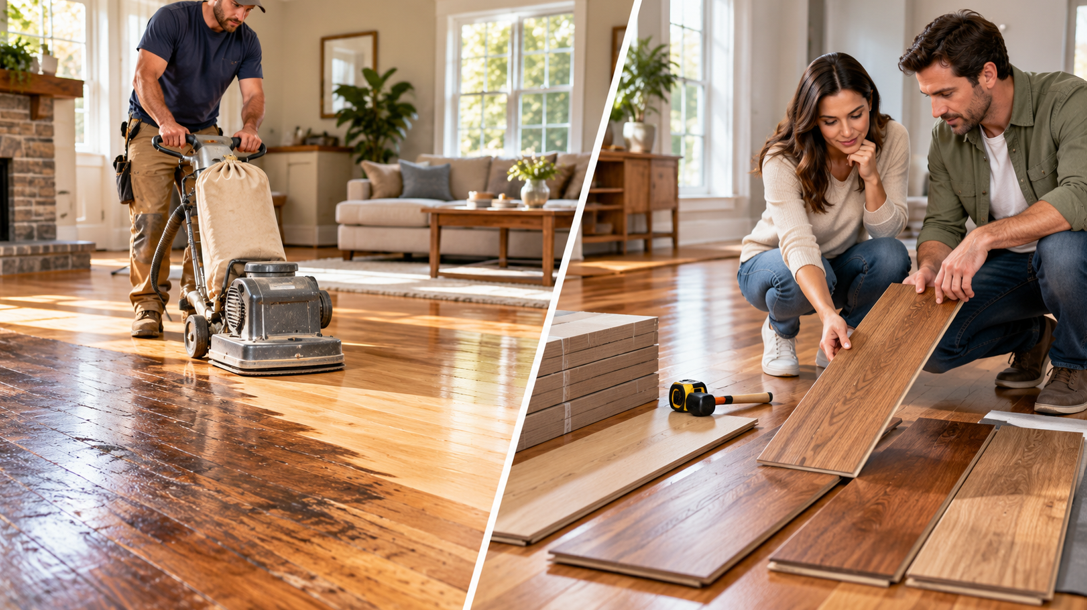
Hardwood floors age along with your home. Over time, foot traffic, pets, sunlight, and Oklahoma's humid summers can leave floors looking dull, scratched, or worn. When that happens, many Bixby homeowners wonder whether to refinish what they have or replace it entirely.
At Brucke Flooring, we specialize in hardwood installation, repair, and refinishing, so we see both sides of this decision every day. In this guide, we explain the signs that point to refinishing, the signs that point to replacement, and how to make the best choice for your home and budget.
What Hardwood Refinishing Involves
Refinishing brings your existing floors back to life. The process typically includes:
Sanding away the old finish and surface wear
Repairing small gaps, loose boards, or damaged areas
Staining to refresh or change the color
Applying several coats of protective finish
The result is a floor that looks fresh and new while keeping the original wood in place.
Signs Your Floors Are Good Candidates for Refinishing
Refinishing is usually the right choice when:
Scratches and scuffs are on the surface rather than deep in the wood
The finish looks dull, worn, or gray in high-traffic areas
You want a new stain color to match an updated style
Boards are still firmly attached and not soft or spongy
There is enough wood thickness left to sand
Solid hardwood can usually be refinished several times over its life. Engineered hardwood with a thick wear layer can often be refinished once or twice.
Signs Replacement May Be the Better Option
Replacement may make more sense when:
Boards are severely cupped, buckled, or warped from water damage
The floor feels soft or bouncy, which can point to subfloor problems
Previous sanding has worn the wood too thin
There is widespread pet damage that has soaked into the wood
You want a completely different floor type or layout
Engineered hardwood has a very thin top layer that cannot be sanded
Comparing Costs
Refinishing usually costs significantly less than installing new hardwood. It also takes less time and creates less waste.
However, if damage is widespread or the subfloor needs work, replacement can offer better long-term value. A professional assessment helps you see the true picture.
Partial Repairs: A Middle Ground
Sometimes the answer is a mix of both. Damaged boards can be removed and replaced with matching wood, then the entire floor can be sanded and refinished so everything blends together.
This approach works well for:
Isolated water damage near a sink, door, or appliance
A few boards with deep pet stains
Small areas damaged during a remodel
How Oklahoma Weather Plays a Role
Bixby's humid summers and dry winters cause wood to expand and contract. Over time, this can lead to small gaps, slight cupping, or finish wear along board edges. In many cases, these issues can be corrected during refinishing.
If cupping or buckling came from a storm, leak, or flood, the underlying moisture problem needs to be addressed first. Once the subfloor is dry, many floors can still be saved.
Refinishing Trends for 2026
If you choose to refinish, you can also update your style. Popular choices this year include:
Natural and light stains that show off the wood grain
Warm honey and wheat tones replacing cool grays
Matte and satin finishes for a modern, low-sheen look
Water-based finishes with low odor and faster dry times
To see whether your floors are ready for a fresh look, explore our hardwood refinishing services and the finishes we offer.
Questions to Ask Before You Decide
How old are the floors, and have they been refinished before?
Is the damage on the surface or deep in the wood?
Are there signs of moisture or subfloor problems?
Do you love the existing wood species and plank width?
How long do you plan to stay in your home?
Your answers, combined with an in-home assessment, will point you toward the best option.
Caring for Floors After Refinishing
To keep refinished floors looking their best:
Wait the recommended time before moving furniture back.
Add felt pads under all furniture legs.
Sweep or vacuum often to remove grit.
Use a hardwood-safe cleaner with a barely damp mop.
Place mats at entries to catch dirt and moisture.
Why Choose a Hardwood Specialist
Not every flooring company handles both installation and refinishing. Because we do both, we can give you an honest recommendation without pushing one option over the other. Every project receives our White Glove Treatment, with clear explanations at every step and careful protection of your home.
As a BBB Accredited Business, we take pride in helping Bixby families make smart, lasting decisions about their floors.
Common Questions From Bixby Homeowners
How long does refinishing take?
Most projects take three to five days, depending on the size of the space and the finish chosen.
Can I stay home during refinishing?
Many homeowners stay in other parts of the house, especially with water-based finishes that have lower odor.
Can water-damaged hardwood be refinished?
Often, yes. Once the source is fixed and the boards and subfloor are fully dry, mild cupping can flatten out, and sanding and refinishing can restore the surface.
How often do hardwood floors need refinishing?
Most homes benefit from a full refinish every 10 to 15 years, with a lighter screen and recoat in between for busy areas.
Get an Expert Opinion
Whether your floors need a fresh finish or a full replacement, the right answer depends on their condition and your goals. An expert assessment takes the guesswork out of the decision.
Contact our team to schedule a free estimate, and let us help you bring your Bixby floors back to their best.


