

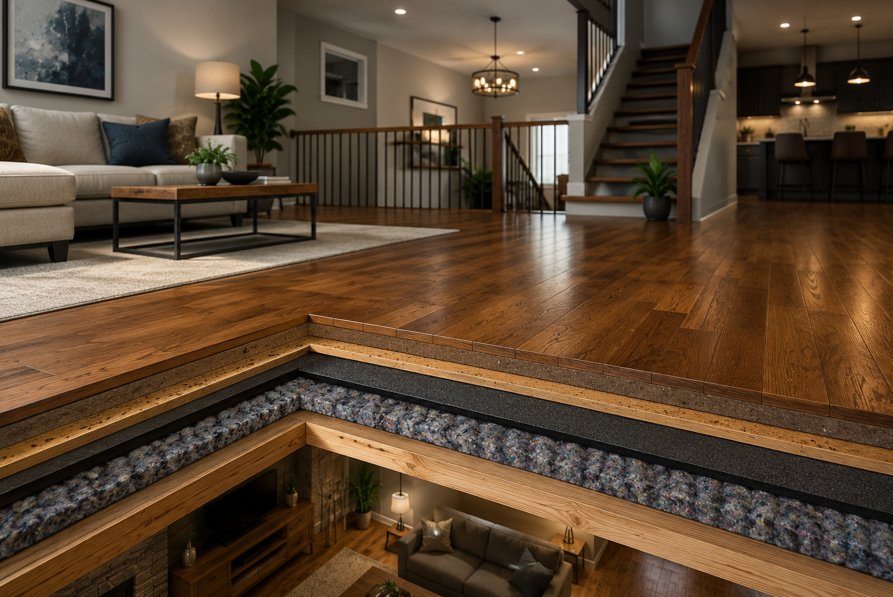
Why Noise Becomes a Bigger Issue in Multi-Level Homes
Hardwood flooring continues to be one of the most popular choices for Tulsa homeowners because it offers timeless style, long-term durability, and beautiful natural character. But in multi-level homes, flooring decisions often involve more than appearance alone.
Noise matters too.
Footsteps overhead, children running across hallways, pets moving between rooms, and sound carrying through open floor plans can quickly become frustrating in homes with multiple floors. Many homeowners love the look of hardwood but worry that the wrong installation approach could make everyday noise more noticeable.
The good news is that modern hardwood installation techniques now offer much better sound control than many people realize.
Today’s flooring systems can help reduce:
impact noise
echo
floor vibrations
sound transfer between levels
hollow floor sounds
At Brücke Flooring Co., Tulsa homeowners often look for hardwood flooring solutions that balance style, comfort, and quieter living — especially in larger family homes with upstairs living spaces.
Noise reduction starts long before the first hardwood plank is installed. The right materials, installation methods, and subfloor preparation all play a major role in how sound travels throughout the home.
For families planning renovations in 2026, understanding those options can help create spaces that feel both beautiful and comfortable to live in every day.
Why Hardwood Floors Sometimes Sound Louder Upstairs
Hardwood itself isn’t automatically noisy. In fact, properly installed hardwood flooring can feel solid, comfortable, and surprisingly quiet.
Problems usually develop when sound control isn’t considered during installation.
In multi-level homes, sound travels in two primary ways:
through the air
through structural vibration
Footsteps create impact vibrations that move through flooring, subfloors, joists, and ceilings below. Hard surfaces naturally transfer sound more easily than soft materials like carpet.
Several factors can increase noise levels:
thin subfloors
poor underlayment choices
floating floor movement
gaps beneath flooring
open-concept layouts
high ceilings
minimal soft furnishings
Tulsa homes with second-story living spaces often experience these issues more noticeably because modern layouts tend to feature:
larger open areas
vaulted ceilings
hardwood throughout multiple rooms
fewer sound barriers
Without proper installation planning, even beautiful hardwood floors can create unwanted echo and impact noise.
That’s why professional installation strategy matters just as much as flooring selection itself.
Common Noise Complaints in Multi-Level Tulsa Homes
Many homeowners don’t fully notice sound transfer issues until after new flooring is installed.
Some of the most common complaints include:
Footsteps From Upstairs Rooms
This is often the biggest concern in homes with children or active households.
Walking across hardwood floors can create:
thumping sounds
vibration transfer
squeaking
creaking
The issue becomes more noticeable during early mornings or late evenings when homes are quieter.
Echo in Open Living Areas
Large open-concept spaces with hardwood flooring sometimes create excessive echo.
This happens because hard surfaces reflect sound rather than absorb it.
Rooms with:
tall ceilings
minimal rugs
limited furniture
wide hallways
can amplify everyday sounds much more than homeowners expect.
Pet Noise Across Hardwood Floors
Dogs moving quickly across hardwood floors often create repetitive clicking and impact noise.
In multi-level homes, those sounds may travel clearly into downstairs living spaces.
Hollow Floor Sounds
Improper installation methods or low-quality underlayment can create hollow or “drummy” sounds beneath hardwood flooring.
This usually indicates:
movement beneath planks
poor subfloor contact
inadequate sound insulation
Squeaking Over Time
As homes naturally shift and settle, flooring systems without proper installation support may begin squeaking under pressure.
Humidity swings in Tulsa can sometimes contribute to this problem if flooring expansion and contraction aren’t managed correctly.
How Modern Hardwood Installation Helps Reduce Sound
The good news for homeowners is that today’s installation techniques offer far more sound-control solutions than older flooring systems.
Noise reduction begins underneath the hardwood itself.
High-Quality Underlayment Materials
Underlayment acts as a cushioning layer between the hardwood flooring and subfloor.
Modern sound-reducing underlayments help:
absorb impact vibration
reduce echo
soften footstep noise
improve floor stability
Some products are specifically designed for:
upstairs installations
condos
large family homes
open-concept layouts
Choosing the right underlayment often makes one of the biggest differences in overall sound performance.
Proper Subfloor Preparation
Subfloor condition plays a major role in noise control.
Uneven or unstable subfloors can create:
creaking
movement
vibration transfer
hollow sounds
Professional preparation may include:
leveling uneven areas
tightening loose panels
reinforcing weak sections
improving floor stability
Solid flooring foundations create quieter flooring systems overall.
Glue-Assisted Installation Methods
In some situations, glue-assisted installation methods can help reduce floor movement and vibration.
This creates a more solid-feeling floor while minimizing noise transfer between levels.
Installation methods depend heavily on:
flooring type
subfloor construction
room layout
moisture conditions
homeowner goals
Strategic Expansion Planning
Hardwood naturally expands and contracts with humidity changes.
Professional installation planning allows proper expansion spacing without creating excessive floor movement that may increase sound over time.
Best Hardwood Flooring Choices for Quieter Homes
Not all hardwood flooring performs exactly the same when it comes to sound control.
Some flooring types naturally support quieter living better than others.
Engineered Hardwood Often Performs Better Upstairs
Engineered hardwood has become especially popular in Tulsa multi-level homes.
Its layered construction helps provide:
better dimensional stability
reduced movement
improved moisture performance
quieter installation potential
Engineered hardwood also pairs very well with sound-reducing underlayment systems.
Wider Planks Can Reduce Seams and Movement
Wider hardwood planks sometimes help minimize small movement points between boards.
That can reduce:
clicking sounds
shifting noise
minor vibration issues
Wider plank styles also remain very popular in modern Tulsa renovations because they create cleaner, more spacious visual lines.
Matte Finishes Help Create Softer Spaces
While finish type doesn’t directly reduce structural sound, softer matte finishes often contribute to warmer, less echo-prone interiors when paired with:
rugs
furniture
layered textures
Glossy spaces sometimes feel acoustically harsher overall.
Dense Hardwood Species Improve Stability
Some hardwood species naturally feel denser and more solid underfoot.
Greater density may help reduce:
floor vibration
movement noise
hollow acoustics
Professional guidance helps homeowners choose flooring that balances:
appearance
durability
comfort
acoustic performance
Why Underlayment Matters More Than Many Homeowners Realize
When homeowners focus on flooring upgrades, most attention naturally goes toward plank color, finish, and style.
But the material underneath the hardwood often matters just as much for long-term comfort.
Underlayment acts as the hidden performance layer of the floor.
Modern sound-reducing underlayment can help:
absorb vibration
reduce structural sound transfer
improve walking comfort
create a more solid floor feel
minimize echo
Different underlayments offer different performance levels.
Some focus primarily on:
moisture protection
cushioning
thermal insulation
Others are specifically engineered for acoustic control in multi-level homes.
Professional hardwood floor installation helps Tulsa homeowners choose flooring systems that combine beautiful design with improved sound performance and long-term durability.
The right underlayment becomes especially important in:
upstairs bedrooms
hallways
playrooms
home offices
open-concept living spaces
Noise reduction is rarely about a single product alone. It’s usually the combination of:
quality materials
installation precision
subfloor preparation
layout planning
that creates the biggest improvement.
Smart Design Choices That Naturally Reduce Indoor Noise
Flooring installation is only part of the solution.
Interior design choices also affect how sound behaves inside a home.
Area Rugs Add Major Sound Absorption
Strategically placed rugs help soften:
footsteps
echo
vibration
pet noise
Rugs work especially well in:
upstairs hallways
living rooms
bedrooms
stair landings
Even smaller accent rugs can noticeably improve room acoustics.
Furniture Placement Matters
Rooms with minimal furniture tend to echo more.
Soft furnishings naturally absorb sound:
sofas
upholstered chairs
curtains
fabric headboards
wall décor
Homes with layered textures often feel noticeably quieter overall.
Staircase Design Impacts Sound Transfer
Open staircases allow sound to travel freely between levels.
Adding:
stair runners
nearby rugs
acoustic wall décor
can help reduce sound movement significantly.
Ceiling Treatments Can Help Large Spaces
In homes with especially tall ceilings or open-concept layouts, sound may bounce more aggressively between surfaces.
Acoustic-friendly design features like:
wood beams
textured finishes
soft furnishings
can help soften overall acoustics naturally.
Why Professional Installation Makes Such a Big Difference
Even high-quality flooring materials won’t perform properly if installation shortcuts create movement beneath the floor.
Professional installation directly affects:
sound control
floor stability
long-term durability
comfort underfoot
expansion performance
Improper installation can create:
squeaking
hollow sounds
shifting boards
uneven vibration transfer
That’s why experienced flooring professionals evaluate much more than surface appearance alone.
Installation planning often includes:
subfloor moisture testing
leveling evaluation
acoustic considerations
humidity conditions
structural movement
room usage patterns
Tulsa’s climate also matters.
Seasonal humidity swings affect hardwood movement throughout the year. Installation methods that work well in one region may not perform the same way in Oklahoma conditions.
Professional planning helps reduce future flooring issues before they begin.
Multi-Level Homes Are Prioritizing Comfort More Than Ever in 2026
Homeowners today are thinking more carefully about how their homes actually feel to live in every day.
Quiet comfort has become a major renovation priority.
People want spaces that feel:
peaceful
warm
functional
relaxing
family-friendly
That shift has increased demand for flooring systems that combine:
visual beauty
durability
easier maintenance
improved acoustic comfort
Open-concept layouts remain extremely popular in Tulsa, but they also create more opportunities for sound transfer between rooms and levels.
As a result, many homeowners now prioritize:
sound-reducing underlayments
engineered hardwood systems
quieter installation methods
softer interior finishes
Comfort-focused design continues shaping renovation decisions across Oklahoma in 2026.
Beautiful Hardwood Floors Can Also Create Quieter Living Spaces
Hardwood flooring doesn’t have to mean noisy living spaces.
With the right installation strategy, Tulsa homeowners can enjoy beautiful wood flooring while also reducing many of the sound issues commonly associated with multi-level homes.
Modern flooring systems now offer better solutions for:
footstep noise
vibration transfer
echo reduction
upstairs sound control
long-term floor stability
The key is approaching hardwood installation as a complete system rather than focusing only on the flooring surface itself.
Subfloor preparation, underlayment quality, installation precision, and room design all work together to create more comfortable living environments.
For families, pet owners, and homeowners with active multi-level households, those details make a major difference in everyday comfort.
If you’re planning hardwood upgrades for a multi-level home, reach out to us to explore flooring solutions designed for both beauty and quieter living.


