

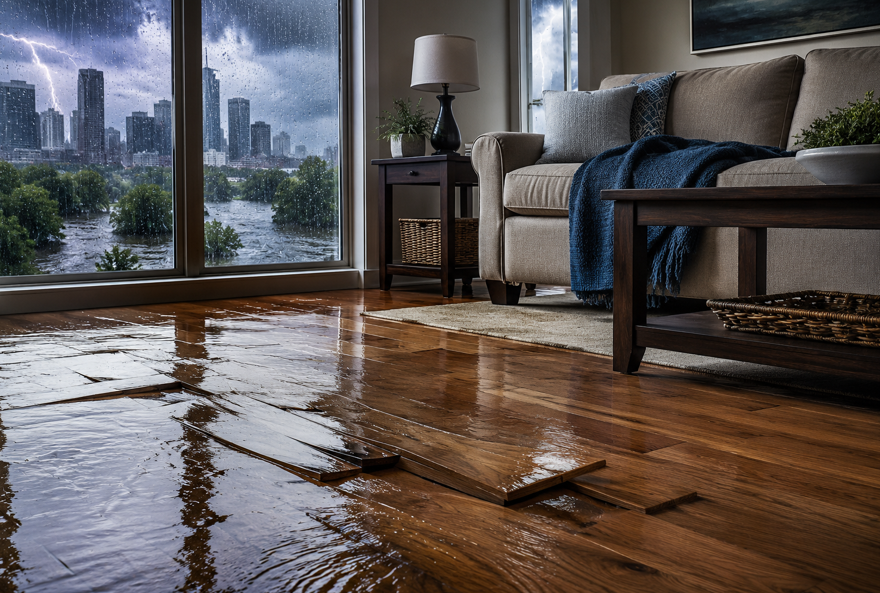
Tulsa Storm Season Can Be Tough on Hardwood Floors
In Tulsa, storm season has a way of arriving fast and leaving homeowners dealing with more than just muddy yards and overflowing gutters. One heavy downpour can push moisture into places most people never think about — especially hardwood flooring. Between spring thunderstorms, sudden flash floods, rising humidity, and long stretches of rain, local homes face real moisture risks every year.
Hardwood floors are beautiful, durable, and timeless, but they’re still made from natural wood. That means they react to moisture changes quickly. Even a small amount of trapped water can create noticeable damage if it isn’t addressed early.
Many Tulsa homeowners focus on roofing, siding, or foundation issues after a storm, which makes sense. But flooring damage often develops quietly beneath the surface. By the time boards start warping or discoloration appears, hidden moisture may already be affecting the subfloor underneath.
At Brucke Flooring Co., helping Tulsa homeowners protect their floors before and after storm season is part of the job. From minor moisture concerns to major restoration projects, local weather patterns play a huge role in long-term flooring performance.
Understanding how seasonal storms affect hardwood flooring can help homeowners act faster, prevent expensive repairs, and preserve the comfort and value of their homes for years to come.
Why Hardwood Floors React So Quickly to Storm-Related Moisture
Hardwood flooring naturally expands and contracts depending on moisture levels in the air and surrounding environment. During Tulsa’s storm season, that balance can change quickly.
A sudden increase in indoor humidity after heavy rain may not seem like a major issue at first. But over time, excess moisture begins soaking into the wood fibres. Once that happens, flooring boards can swell, shift, cup, or even separate.
The challenge is that water damage doesn’t always come from obvious flooding.
Sometimes the moisture source is easy to spot:
Water entering through a doorway
A roof leak during severe storms
Flooded basements or crawl spaces
Overflowing gutters near the foundation
Other times, the damage develops more slowly:
Humid indoor air lingering for days
Moisture trapped beneath flooring
Small leaks hidden behind appliances
Damp subfloors after heavy rain
Tulsa’s weather patterns make these problems more common than many homeowners realise. Warm temperatures combined with humidity create conditions where moisture stays trapped longer inside the home.
Hardwood floors are especially vulnerable because wood absorbs moisture naturally. Once that moisture settles beneath the surface, boards can begin changing shape even before visible signs appear.
That’s why quick cleanup after storms matters so much. What looks like a harmless damp spot today can turn into widespread flooring damage later if moisture continues spreading underneath the floor.
Early Warning Signs Homeowners Often Overlook
Storm-related flooring damage doesn’t always happen dramatically. In many Tulsa homes, the earliest warning signs are subtle.
Catching those signs early can make the difference between a manageable repair and a much larger restoration project.
Cupping Along the Edges
Cupping happens when the edges of hardwood planks rise higher than the centre. This usually means moisture is entering the flooring from below.
Homeowners often notice this after:
Prolonged humidity
Heavy seasonal rain
Crawl space moisture
Minor flooding events
Even slight cupping deserves attention because it signals moisture imbalance underneath the floor.
Buckling or Lifting Boards
When hardwood boards begin lifting away from the subfloor, moisture exposure is typically much more severe.
This often happens after:
Standing water
Flood intrusion
Major plumbing leaks
Delayed cleanup after storms
Buckling can spread quickly if the underlying moisture remains trapped.
Dark Stains or Discoloration
Water stains don’t always appear immediately. Sometimes dark patches develop gradually over several weeks after a storm.
These stains may indicate:
Finish deterioration
Deep water penetration
Mold development beneath the surface
Long-term moisture exposure
Soft or Spongy Areas
Hardwood floors should always feel solid underfoot.
If certain areas feel soft, uneven, or slightly bouncy, moisture may already be affecting the subfloor underneath the hardwood planks.
Persistent Musty Odors
One of the most overlooked warning signs is smell.
If a room develops a damp or musty odor after storms, trapped moisture could still be present even if surfaces appear dry.
That smell often signals:
Poor ventilation
Hidden dampness
Moisture trapped beneath flooring
Early mold growth
Why Delaying Repairs Often Makes Water Damage Worse
After a storm passes, many homeowners assume the problem is solved once visible water disappears. Unfortunately, hardwood flooring damage rarely works that way.
Wood retains moisture longer than most people expect. Moisture can remain trapped:
beneath planks
inside subfloors
around baseboards
under underlayment
inside crawl spaces
Waiting too long allows the damage to spread gradually.
What begins as a small flooring issue can eventually lead to:
permanent board warping
finish breakdown
weakened structural support
mold growth
expensive floor replacement
Humidity adds another layer of risk during Tulsa’s warmer months. Even after a storm ends, high moisture levels in the air continue affecting the flooring if indoor humidity isn’t controlled properly.
Homeowners sometimes postpone repairs because the floor “doesn’t look that bad yet.” That delay often increases restoration costs significantly.
The longer moisture remains inside hardwood flooring systems, the harder it becomes to fully restore the wood to its original condition.
Fast action almost always improves the chances of saving the floor.
Smart Ways Tulsa Homeowners Can Reduce Storm-Related Flooring Damage
Seasonal storms may be unavoidable, but many moisture-related flooring problems can still be reduced with proactive planning.
Keep Gutters and Drainage Systems Clear
Overflowing gutters are one of the biggest contributors to foundation moisture problems.
When rainwater pools around the home, moisture can eventually seep indoors and affect hardwood flooring from below.
Regular gutter cleaning and proper drainage help redirect water safely away from the home.
Monitor Indoor Humidity Levels
Humidity matters just as much as direct water exposure.
Indoor humidity levels that stay too high for long periods allow hardwood floors to absorb excess moisture gradually.
A few practical ways to reduce indoor humidity include:
using ceiling fans
improving airflow
running dehumidifiers
maintaining HVAC systems properly
increasing ventilation after storms
Protect Entryways During Heavy Rain
Tulsa storms often bring large amounts of mud and standing water indoors.
Simple habits can help reduce moisture exposure:
placing absorbent mats near doors
removing wet shoes quickly
drying puddles immediately
protecting vulnerable flooring areas
Inspect Windows and Door Seals
Small gaps around windows and exterior doors allow moisture intrusion during storms.
Over time, repeated exposure can damage nearby hardwood flooring without homeowners realising where the moisture is coming from.
Address Minor Leaks Immediately
Tiny leaks rarely stay tiny for long.
A small plumbing drip combined with Tulsa humidity can slowly create major flooring damage beneath the surface.
At Brucke Flooring Co., Tulsa homeowners can find professional guidance for protecting hardwood floors before seasonal storms create long-term damage.
When Hardwood Floors Can Be Restored — and When Replacement Makes More Sense
One of the biggest concerns homeowners have after water exposure is whether their hardwood flooring can actually be saved.
The answer depends on several factors:
how much water entered the home
how long moisture remained
the condition of the subfloor
the flooring type
how quickly cleanup began
Situations Where Restoration Often Works
Professional restoration may be possible when:
moisture exposure was limited
cleanup happened quickly
boards haven’t warped severely
the subfloor remains stable
damage is isolated to smaller areas
In these cases, drying equipment and targeted repairs may restore much of the flooring successfully.
Situations Where Damage Is More Severe
Sometimes replacement becomes the better long-term solution.
This is more common when:
standing floodwater remained for extended periods
flooring buckled dramatically
mold growth developed underneath
subfloors weakened significantly
moisture spread throughout multiple rooms
The key is accurate assessment.
Moisture damage isn’t always visible from the surface, which is why professional inspections matter after severe storms.
A floor that appears “mostly fine” could still have hidden moisture underneath.
Fast Evaluation Makes a Major Difference
The sooner moisture is identified, the better the chances of preserving the flooring.
Professional inspections often include:
moisture testing
subfloor evaluation
humidity analysis
structural assessment
drying recommendations
Quick action helps limit long-term damage and gives homeowners more restoration options.
Tulsa Homeowners Are Rethinking Flooring Choices After Severe Storm Seasons
Recent storm seasons have changed how many homeowners think about flooring protection.
More Tulsa residents are looking beyond appearance alone and considering:
moisture resistance
long-term durability
humidity performance
easier maintenance
flood recovery potential
That shift has increased interest in:
engineered hardwood
protective sealants
moisture-resistant finishes
waterproof flooring options
improved subfloor systems
Homeowners aren’t necessarily moving away from hardwood flooring altogether. Instead, they’re becoming more proactive about protecting their investment.
Modern flooring solutions now offer:
stronger finishes
improved moisture barriers
better humidity performance
easier restoration potential
Preventative thinking has become much more common, especially after back-to-back severe storm seasons across Oklahoma.
People want flooring that still delivers warmth and beauty while standing up better to unpredictable weather conditions.
What To Do Immediately After Storm Water Reaches Hardwood Floors
The first few hours after water exposure matter more than most homeowners realise.
Taking the right steps quickly can significantly reduce long-term flooring damage.
1. Remove Standing Water Immediately
The longer water sits on hardwood flooring, the deeper it penetrates into the wood and subfloor.
Use:
towels
wet vacuums
mops
fans
Fast removal helps slow moisture absorption.
2. Increase Indoor Airflow
Good airflow helps reduce trapped humidity indoors.
Open windows if weather allows and use fans or dehumidifiers to improve drying conditions throughout the home.
3. Avoid Premature DIY Repairs
Many homeowners try sanding or refinishing too early before moisture levels stabilise.
That can create additional damage or lock moisture beneath the finish.
4. Document Damage for Insurance Purposes
Take clear photos of:
standing water
affected flooring
visible warping
discoloration
damaged materials
Detailed documentation may help simplify insurance claims later.
5. Schedule a Professional Flooring Evaluation
Hidden moisture often remains long after visible water disappears.
When storm damage affects your flooring, professional water damage restoration can help identify hidden moisture before it leads to long-term structural problems.
Protecting Hardwood Floors Starts Before the Next Tulsa Storm Arrives
Tulsa’s seasonal storms aren’t going away anytime soon. Heavy rain, flash flooding, humidity spikes, and unpredictable weather patterns will continue affecting homes across the area every year.
The good news is that proactive care makes a huge difference.
Understanding how moisture affects hardwood flooring helps homeowners:
catch warning signs earlier
respond faster after storms
reduce repair costs
protect long-term home value
preserve beautiful flooring for years
Whether it’s minor humidity exposure or major storm-related water intrusion, acting quickly always improves the outcome.
Routine inspections, proper moisture control, and professional evaluations can help prevent small issues from turning into large restoration projects later.
If you’ve noticed moisture-related changes in your hardwood floors after recent storms, reach out to us to schedule a professional evaluation.


