

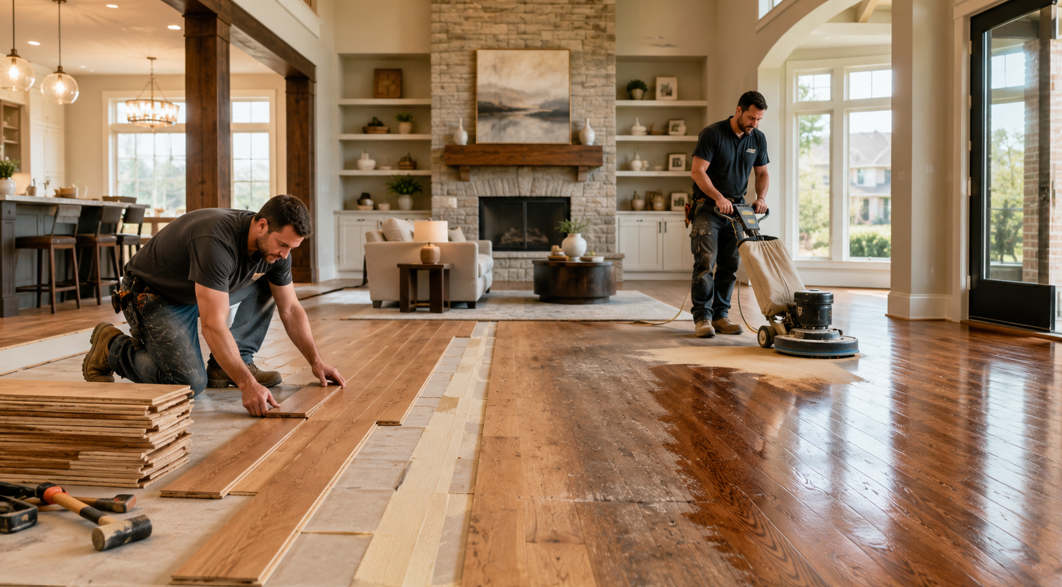
Hardwood floors can change the entire character of a home. They add warmth, visual continuity, and a sense of craftsmanship that works beautifully in everything from historic Tulsa houses to newer open-plan properties. When those floors begin to look worn, dated, uneven, or damaged, however, homeowners often face one important question: is it better to refinish the hardwood that is already there or install a new floor?
The answer depends on more than appearance. The condition of the boards, the subfloor, the floor’s thickness, past refinishing work, moisture exposure, layout goals, and budget all play a role. Refinishing can restore genuine hardwood and reveal beauty that has been hidden beneath scratches or an outdated stain. Installation creates a fresh foundation when the existing floor is too damaged, no longer suits the home, or cannot be refinished safely.
At Brücke Flooring, we help Tulsa homeowners understand both paths without overcomplicating the decision. This guide explains how installation and refinishing differ, when each option makes sense, and what to consider before choosing the right direction for your home.
The Quick Answer
Refinishing is often the better choice when the existing hardwood is structurally sound but looks scratched, dull, discolored, or stylistically outdated. The process removes the worn surface, repairs manageable imperfections, and applies a new stain and protective finish.
New installation is usually the better choice when the floor has widespread water damage, severe movement, extensive missing sections, very thin wear layers, repeated patchwork, or a layout that no longer works. It may also be the right move when the home does not currently have hardwood and the goal is to create a completely new look.
A simple way to frame the decision is:
Choose refinishing when the floor’s foundation is good and the main problem is its surface.
Choose installation when the floor itself, the structure below it, or the design needs a more complete change.
That distinction sounds straightforward, but several details can shift the recommendation. A professional inspection is valuable because hardwood can hide both potential and damage beneath its finish.
What Hardwood Refinishing Actually Involves
Refinishing renews an existing hardwood floor rather than replacing it. The exact process varies according to the floor’s condition, wood species, finish, and desired result.
A typical project includes inspection, selected repairs, sanding, staining when a color change is desired, sealing, and enough curing time before normal use resumes.
The biggest benefit is preservation. Solid hardwood can often serve a home for decades, and refinishing allows homeowners to keep its character while improving the appearance. In older Tulsa homes, this can be especially valuable when the flooring contributes to the property’s original charm.
Refinishing also creates meaningful design flexibility. A glossy amber-toned floor may be updated with a softer matte finish. A darker stain may be replaced with a lighter, more natural look, provided the wood and previous treatments allow it. Scratches, faded traffic paths, and many surface stains can disappear during sanding.
Still, refinishing is not a cure for every problem. Sanding does not repair a failing subfloor, eliminate deep structural movement, or restore boards that have lost too much material. The floor needs enough usable wood above the tongue-and-groove joint to tolerate another sanding cycle.
What New Hardwood Installation Involves
Installation replaces an unsuitable floor or adds hardwood where it does not currently exist. It offers more control over wood species, plank width, grade, finish, pattern, and how flooring flows from room to room.
The project often begins below the finished surface. Existing flooring may need removal, and the subfloor needs to be checked for moisture, movement, flatness, and damage. Depending on the home and product, preparation may include securing loose panels, repairing sections, addressing height differences, or improving transitions.
Homeowners considering hardwood floor installation can choose between options such as solid hardwood and engineered hardwood. The best fit depends on the room, subfloor, environmental conditions, installation method, and preferred appearance.
New installation can also solve design problems that refinishing cannot. It can replace mismatched boards, extend hardwood into additional rooms, change plank width or direction, improve transitions, and coordinate the floor with a larger renovation.
Because installation is a larger transformation, planning matters. The best results come from considering the entire room and how the floor connects with cabinetry, stairs, doors, trim, adjoining materials, and natural light.
Signs Refinishing May Be the Right Choice
Refinishing is worth exploring when the floor still feels stable and most concerns are cosmetic.
The Floor Is Scratched or Dull
Everyday living eventually leaves marks. Pet nails, shoes, moved furniture, and foot traffic can wear through the finish or create visible scratches. When the damage is limited to the surface, sanding and a new finish can restore a clean, even appearance.
The Color No Longer Suits the Home
Flooring trends change, but replacing quality hardwood purely because the stain feels dated may be unnecessary. Refinishing can often shift the color and sheen enough to make the entire space feel more current.
The final possibilities depend on the wood species, previous stain, repairs, and how deeply old color has penetrated. A sample area can help set realistic expectations before the full project begins.
Traffic Areas Look Faded
Hallways, entryways, and routes between kitchens and living rooms often wear faster than low-traffic areas. A patchy sheen or faded pathway can make an otherwise solid floor look tired. Refinishing creates a more consistent finish across the room.
There Are Small Gaps or Manageable Repairs
Minor gaps, isolated damaged boards, and a few loose sections do not always require replacement. Selected repairs can often be completed before sanding so the floor looks more unified.
Seasonal movement is normal in many wood floors, so the timing and size of gaps matter. A professional can distinguish between ordinary movement and a condition that points to moisture or installation concerns.
You Want to Preserve Original Hardwood
Original flooring can be an important part of a home’s story. If the boards are thick enough and structurally sound, refinishing can preserve their grain, variation, and historic character while providing a cleaner finish for modern living.
Signs New Installation May Be the Better Option
Installation becomes more practical when the current floor cannot provide a reliable foundation or the design goal requires a complete change.
Water Damage Is Widespread
A small affected area may sometimes be repaired, but broad buckling, deep staining, softness, persistent odor, or movement can indicate more serious damage. Water may also have reached the subfloor or surrounding materials.
The source of moisture needs to be resolved before new flooring is installed. Covering an active problem can lead to repeated damage and unnecessary cost.
The Boards Are Too Thin to Sand Again
Each full refinishing removes a small amount of wood. After several sanding cycles, there may not be enough material above the tongue-and-groove connection for another safe refinish.
Signs can include exposed fasteners, splintering edges, unusually thin boards, or movement near the joints. An inspection can confirm whether another sanding is realistic.
Damage Extends Through the Wood
Deep pet stains, burns, severe gouges, broken tongues, rot, or extensive splitting may remain visible after sanding. A few boards can often be replaced, but widespread damage may make new installation more efficient and visually consistent.
The Existing Floor Is a Patchwork
Additions, previous renovations, and isolated repairs can leave a home with different species, widths, heights, or directions. Refinishing may improve the color, but it cannot always make fundamentally different materials look like one continuous floor.
You Want a Major Design Change
Refinishing can adjust color and sheen, but it cannot change narrow boards into wide planks or turn one species into another. New installation offers a broader reset when the desired style differs significantly from what is already there.
The Subfloor Needs Substantial Work
Soft areas, recurring squeaks, uneven sections, or movement may point to issues below the hardwood. Removing the existing floor creates access for repairs and gives the new installation a stronger base.
How Cost and Long-Term Value Affect the Decision
Refinishing generally involves fewer new materials, so it can offer strong value when the existing floor is a suitable candidate. It preserves what is already in the home and focuses spending on restoration, repairs, stain, and finish.
Installation involves new flooring materials and often more preparation. The total scope may include removal, disposal, subfloor work, trim adjustments, transitions, and installation labor. Even so, replacement can be the more responsible investment when repeated repairs would only postpone an unavoidable change.
When comparing options, look beyond the opening estimate. Consider the amount of repair work, the remaining thickness of the floor, expected durability, future room matching, planned remodeling, and whether moisture or subfloor work is required.
The lowest initial cost is not always the strongest value. The goal is a floor that looks right, performs reliably, and avoids paying twice for the same area.
How Much Disruption Can You Expect?
Both projects require preparation, but the type of disruption differs.
Refinishing
Refinishing usually requires furniture removal, controlled sanding, application of stain or finish, and curing time. Access to the room may be limited while coatings dry and harden. The exact schedule depends on the finish system, repairs, humidity, and project size.
A dust-managed process helps keep the home cleaner, but no sanding project is completely invisible. Good containment, careful cleanup, and clear communication make a noticeable difference.
Installation
Installation may involve demolition, material delivery, cutting, subfloor preparation, and trim work. Some prefinished flooring can be walked on sooner than a newly coated site-finished floor, although the full timeline depends on the product and scope.
Installation can also affect adjoining spaces when flooring runs continuously between rooms. A coordinated plan helps homeowners understand which furniture needs moving, where materials will be staged, and when rooms can return to normal use.
Neither option needs to feel chaotic. A professional team can explain the sequence in plain language and keep the work moving efficiently.
Style Possibilities With Each Option
The visual goal often makes the decision easier.
What Refinishing Can Change
Refinishing can update stain color, finish sheen, surface consistency, visible scratches, and the overall tone of the room. Results vary by species because different woods accept stain differently. Existing pet stains, replacement boards, and sun exposure may also affect color consistency.
What Installation Can Change
New installation gives you control over species, solid or engineered construction, plank dimensions, grade, texture, finish, direction, and layout. This flexibility is useful during a larger renovation because the flooring can be selected alongside cabinets, paint, trim, and furnishings.
Tulsa Conditions Worth Considering
Wood responds to its environment. Indoor humidity, plumbing leaks, storm-related water, crawl-space conditions, and concrete moisture can all affect hardwood performance.
Before refinishing, the floor needs to be stable enough for sanding and finishing. If moisture caused cupping or movement, drying and evaluation come first. Sanding too early can create an uneven result once the boards continue changing.
Before installation, the new material and subfloor need to meet the product’s environmental requirements. The home’s climate-control system, moisture readings, and installation location all influence product selection and preparation.
This is one reason a visual inspection alone can be misleading. The surface may appear ready while the material below remains damp or uneven. Moisture testing and subfloor evaluation provide a more reliable basis for the decision.
Which Option Fits Common Tulsa Ho
me Scenarios?
Your Historic Home Has Original Hardwood With Surface Wear
Refinishing is often the first option to explore. Original boards may have character that is difficult to recreate, and surface wear can sometimes be removed without sacrificing that history.
One Room Has Severe Damage but the Rest Looks Good
A combination approach may work. Damaged boards or a defined section can sometimes be replaced, followed by refinishing to improve the visual blend. The species, age, width, and existing color will affect how closely repairs match.
You Are Remodeling an Open-Plan Main Level
Installation may provide better continuity, especially when walls are moving, cabinets are changing, or several flooring materials are being replaced. A unified plan can reduce awkward transitions and mismatched heights.
Your Floor Is Scratched but Feels Solid
Refinishing is likely worth considering. Surface scratches, faded finish, and an outdated color are classic restoration concerns when the boards remain stable.
Your Floor Has Buckling and Soft Areas
Start with a moisture and subfloor assessment. Installation may eventually be needed, but the underlying cause needs attention before the finished floor is replaced.
You Want Wide-Plank Flooring
New installation is the practical route. Refinishing can change the color of existing boards, but not their dimensions.
You Are Preparing the Home for Sale
The best choice depends on condition and return. Refinishing may provide a strong visual improvement when the existing wood is sound. Installation may be justified when the current flooring is visibly failing or creates inconsistency across key rooms.
Make the Decision With a Professional Floor Assessment
The most helpful first step is not choosing a stain or browsing plank samples. It is understanding what is already in the home.
A professional assessment may look at the wood species, remaining wear layer, previous repairs, board movement, moisture readings, subfloor condition, floor heights, room transitions, and the homeowner’s design goals.
From there, the options become clearer. A trustworthy flooring professional will explain whether the current floor is a good refinishing candidate, where repairs may be needed, and when replacement offers better long-term value.
Brücke Flooring takes a no-nonsense, White Glove Treatment approach to that conversation. We would rather explain the tradeoffs clearly than recommend work that does not fit the home.
Choose the Solution That Gives Your Home a Stronger Floor
Hardwood refinishing and new installation can both create a beautiful result, but they solve different problems. Refinishing restores a floor with a solid foundation. Installation creates a new foundation when damage, wear, layout, or design goals call for a larger change.
Refinishing may be right when scratches, fading, and color are the main concerns. Installation may be right when the floor is too thin, structurally compromised, extensively damaged, or no longer aligned with the way the home looks and functions.
The decision becomes easier when condition, moisture, design, disruption, and long-term value are considered together. For a straightforward assessment of your Tulsa hardwood floors, get in touch with Brücke Flooring and let our team help you choose a practical path forward.


