

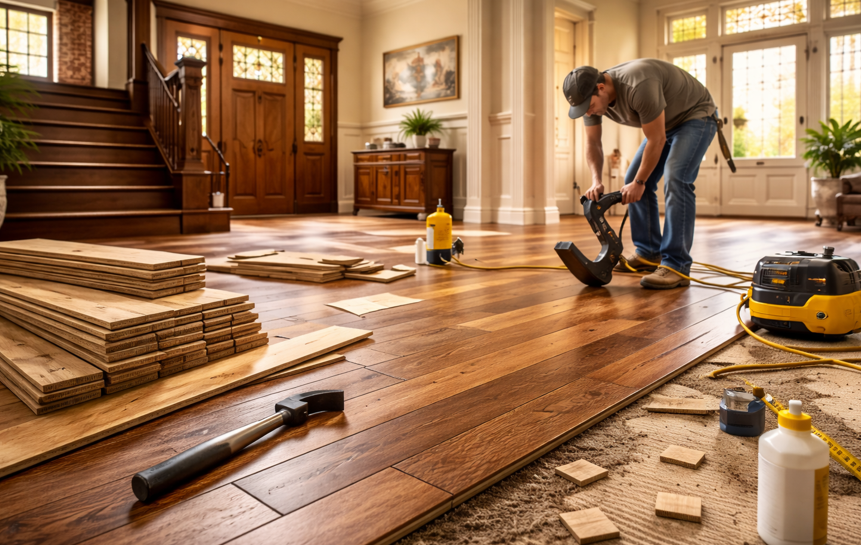
Why Historic Tulsa Homes Deserve a Thoughtful Approach
Historic homes in Tulsa have a character you simply can’t recreate. From original woodwork to unique layouts, these homes tell a story through every detail—including the floors. When it comes to updating or installing hardwood flooring, the goal isn’t just to improve the space. It’s to protect that charm while making the home more comfortable and functional for everyday living.
Older homes often come with their own set of quirks. Uneven subfloors, aging materials, and years of settling can all affect how new flooring should be installed. That’s why a careful, informed approach matters. Hardwood installation in these homes isn’t about rushing the process—it’s about respecting what’s already there.
At Brücke Flooring, we understand how important it is to balance craftsmanship with preservation. Tulsa homeowners want floors that feel authentic to the home while still benefiting from modern durability and performance.
This guide walks you through how hardwood installation works in historic Tulsa homes, what makes these projects different, and how modern techniques can enhance—not replace—the character of your space.
What Makes Historic Homes Different When Installing Hardwood
Installing hardwood in a newer home is usually straightforward. Historic homes, on the other hand, require a more tailored approach.
Older subfloors and structural variations
Many historic homes were built with materials and methods that differ from today’s standards. Subfloors may be uneven, worn, or made from different materials altogether. Before installation begins, it’s important to understand what’s underneath the existing flooring.
Even small variations can affect how hardwood sits and performs. Addressing these details early helps ensure a smooth, stable finish.
Natural settling over time
Homes naturally shift over the years. Floors may slope slightly, walls may not be perfectly square, and transitions between rooms may vary. These aren’t flaws—they’re part of the home’s character.
A skilled installation approach works with these features rather than trying to force everything into perfect alignment.
Existing architectural details
Historic homes often include elements like original trim, baseboards, and door casings that homeowners want to preserve. Hardwood installation needs to fit seamlessly around these features without damaging or altering them unnecessarily.
Choosing the Right Hardwood for a Historic Tulsa Home
Not all hardwood flooring feels right in a historic space. The goal is to select materials that complement the home’s style while offering long-term reliability.
Matching the home’s original character
If the home still has original flooring in some areas, it can serve as a helpful reference. Matching wood species, plank width, and finish style helps maintain a cohesive look throughout the home.
Wider planks, matte finishes, and natural tones often work well in historic properties because they feel timeless rather than overly modern.
Engineered vs. solid hardwood
Both options can work in historic homes, but each has its place:
Solid hardwood offers authenticity and can be refinished multiple times
Engineered hardwood provides added stability, especially in homes with fluctuating humidity
The right choice depends on the home’s structure, environment, and the specific room.
Durability for modern living
Historic charm doesn’t mean sacrificing practicality. Today’s hardwood options offer finishes that are more resistant to wear while still maintaining a natural look. This allows homeowners to enjoy beautiful, durable flooring without compromising style.
Preparing a Historic Home for Hardwood Installation
Preparation is one of the most important parts of the process, especially in older homes.
Evaluating the subfloor
Before installation begins, the subfloor needs to be inspected carefully. Any uneven areas, soft spots, or structural concerns should be addressed. This step ensures the new flooring has a solid foundation.
Managing moisture levels
Tulsa’s climate can bring humidity changes throughout the year. In historic homes, this can be even more noticeable due to older construction methods.
Allowing the hardwood to acclimate to the indoor environment helps prevent expansion or contraction after installation. Maintaining consistent indoor conditions supports long-term performance.
Preserving existing features
Careful preparation includes protecting baseboards, trim, and surrounding finishes. These details contribute to the home’s overall character and should remain intact whenever possible.
Modern Installation Techniques That Respect Historic Design
Today’s installation methods make it possible to achieve a precise, long-lasting result while still honoring the home’s original style.
Precision fitting and layout planning
Instead of forcing a uniform pattern, modern techniques allow installers to adjust layouts based on the home’s structure. This creates a natural flow from room to room.
Careful planning also helps minimize visible transitions and keeps the flooring looking consistent throughout the space.
Dust-conscious installation methods
One of the biggest concerns homeowners have is the impact of installation on their living space. Modern tools and techniques help control dust and maintain a cleaner environment during the process.
This aligns with a white-glove approach, where the goal is to complete the work with minimal disruption.
Blending new flooring with existing elements
In some historic homes, new hardwood needs to connect with older flooring in adjacent areas. Skilled installation techniques make these transitions feel seamless rather than noticeable.
Room-by-Room Considerations in Historic Homes
Each room in a historic home may require a slightly different approach.
Living rooms and main areas
These spaces often highlight the home’s character. Hardwood installation here should emphasize continuity and visual appeal.
Kitchens and dining areas
These areas experience more daily activity. Choosing finishes that balance durability with style helps maintain the floor’s appearance over time.
Hallways and transitions
Hallways connect different parts of the home, so maintaining a consistent flow is important. Proper alignment and spacing ensure the flooring looks intentional throughout.
Bedrooms
Bedrooms offer more flexibility in design while still benefiting from cohesive materials and finishes.
Common Challenges (and How They’re Solved)
Working in historic homes can present unique challenges, but each one has a solution.
Uneven floors
Rather than trying to completely level an older home, installers can make targeted adjustments that improve stability while preserving the home’s character.
Matching existing flooring
When blending new and old materials, careful selection and finishing techniques help create a unified look.
Structural limitations
Older homes may require adjustments to installation methods. Understanding these limitations ensures the flooring performs well without compromising the structure.
The Importance of Professional Hardwood Installation
Installing hardwood in a historic home is not just about laying planks. It’s about understanding how materials behave, how homes age, and how to create a result that feels both authentic and refined.
A professional approach ensures:
Proper evaluation of the home’s structure
Accurate installation techniques
Long-term durability
A finished look that complements the home’s character
If you’re considering upgrading your floors, working with experts in hardwood floor installation helps ensure your investment enhances both the beauty and performance of your home.
How Hardwood Installation Enhances Historic Homes
When done correctly, hardwood installation can elevate a historic home without taking away from its original charm.
Restoring visual warmth
Wood flooring naturally adds warmth and character to a space. In historic homes, it complements existing architectural details beautifully.
Improving functionality
Modern hardwood solutions provide better durability and easier maintenance, making the home more comfortable for everyday living.
Increasing long-term value
Quality flooring can contribute to the home’s overall appeal and long-term value, especially when it aligns with the home’s original style.
Bringing Together Tradition and Modern Craftsmanship
The best hardwood installations in historic homes don’t feel new or out of place. They feel like they’ve always belonged there.
By combining traditional design principles with modern installation techniques, it’s possible to achieve a result that respects the past while supporting the future. The key is thoughtful planning, attention to detail, and a commitment to quality at every stage.
Historic homes deserve that level of care.
Creating Floors That Feel True to Your Home
Upgrading the flooring in a historic Tulsa home is an opportunity to enhance what makes the space special. With the right materials, careful preparation, and skilled installation, hardwood flooring can blend seamlessly into the home’s character while offering lasting performance.
It’s not about changing the story of the home—it’s about continuing it in a way that feels natural and well-crafted.
If you’re exploring options for your space and want guidance that respects both your home and your vision, feel free to reach out to us. A knowledgeable team can help you move forward with confidence.


