

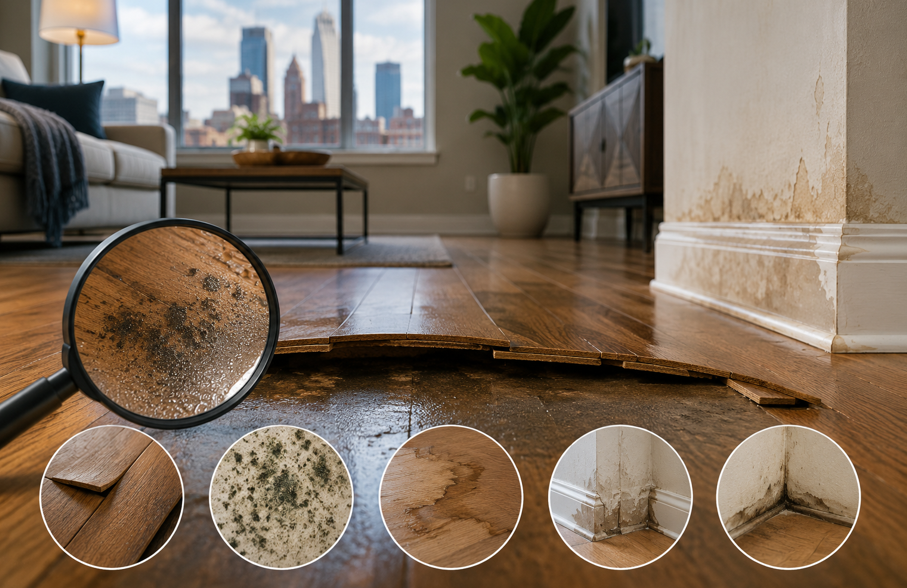
Your Floors May Be Telling You Something Important
Most homeowners expect water damage to be obvious. A burst pipe, a flooded room, or standing water on the floor usually leaves little doubt that something needs attention. Hidden water damage, however, is a different story.
In many Tulsa homes, moisture problems develop quietly beneath flooring surfaces, behind walls, or inside subfloors long before visible damage appears. A small appliance leak, a slow plumbing issue, or moisture brought in during Oklahoma's storm season can gradually affect flooring without drawing immediate attention.
The challenge is that water rarely stays where it starts. Moisture can travel underneath flooring materials, seep into subfloors, and create conditions that weaken your home's structure over time. By the time obvious damage appears, repairs may be more extensive than they would have been if the problem had been identified earlier.
That's why understanding the warning signs matters. At Brucke Flooring, helping Tulsa homeowners protect their flooring investment starts with education and honest guidance. Knowing what to watch for can help you act before minor moisture issues become major restoration projects.
In this guide, we'll explore five common signs of hidden water damage, explain why they occur, and help you understand when it's time to bring in a professional.
Sign #1: Your Floors Are Warping, Buckling, or Cupping
One of the earliest and most noticeable indicators of hidden water damage is a change in the shape of your flooring.
Even a small amount of moisture trapped beneath flooring materials can cause movement over time. Because many flooring products naturally expand when exposed to water, the results often appear as subtle distortions that gradually worsen.
What Homeowners Commonly Notice
You may observe:
Raised edges along flooring boards
Uneven walking surfaces
Areas that appear lifted or swollen
Flooring sections that no longer sit flush together
Slight gaps developing between planks
These changes may seem cosmetic at first, but they often indicate moisture below the surface.
Why Moisture Causes Flooring Movement
When flooring materials absorb moisture, they expand. If that moisture cannot escape, pressure builds within the flooring system.
As materials continue to react to water exposure, they may begin to:
Curve upward
Push against neighboring planks
Separate from the subfloor
Develop uneven surfaces
The longer moisture remains present, the greater the risk of permanent damage.
Hardwood Flooring
Hardwood is particularly sensitive to moisture fluctuations. Excess water can cause boards to cup, crown, or buckle. Because hardwood is a natural material, it readily absorbs moisture from both above and below.
Laminate Flooring
Laminate flooring often swells when moisture reaches its core layers. Once swelling occurs, affected planks frequently require replacement because the material may not return to its original shape.
Luxury Vinyl Flooring
Although luxury vinyl is highly water resistant, moisture trapped beneath the flooring can still create problems. Adhesive failure, lifting edges, and subfloor deterioration can occur if hidden moisture persists.
When Movement Signals a Bigger Problem
A single raised plank might not seem alarming, but widespread warping or gradual expansion often indicates moisture where it shouldn't be. If flooring continues changing shape over time, it's worth investigating the underlying cause before more extensive damage develops.
Sign #2: Musty Odors That Never Seem to Go Away
Sometimes your nose notices water damage before your eyes do.
A persistent musty smell often serves as an early warning sign that moisture has become trapped somewhere within the home. While many homeowners attempt to eliminate the odor with air fresheners or cleaning products, the smell frequently returns because the source remains active.
Why Hidden Moisture Creates Odors
Water creates an environment where mold, mildew, and bacteria can thrive.
When moisture becomes trapped beneath flooring or inside building materials, organic matter begins breaking down. This process often produces the stale, earthy smell many people associate with damp basements or water-damaged areas.
Under Hardwood Floors
Moisture trapped beneath hardwood can remain hidden for long periods. As humidity levels rise beneath the surface, odors often become noticeable before visible flooring damage appears.
Beneath Laminate Flooring
Laminate flooring can trap moisture between the flooring surface and the subfloor. This hidden environment may create conditions where odors gradually become stronger over time.
Around Bathrooms and Kitchens
Areas near sinks, dishwashers, refrigerators, and plumbing fixtures are common sources of slow leaks. Even small amounts of water can create ongoing moisture issues beneath nearby flooring.
Near Exterior Walls
Tulsa's weather patterns can occasionally allow moisture intrusion around windows, doors, and exterior walls. If water enters these areas repeatedly, odors may develop before visible signs emerge.
Why Air Fresheners Don't Solve the Problem
Masking odors only addresses the symptom.
The moisture source remains active, allowing mold and mildew growth to continue. If a musty smell returns repeatedly despite cleaning efforts, hidden moisture may be contributing to the problem.
Persistent odors deserve attention because they often signal conditions that can affect both flooring performance and indoor air quality.
Sign #3: Discoloration, Stains, or Unexpected Changes in Appearance
Flooring doesn't always need to buckle or feel soft to reveal water damage.
Visual changes often provide valuable clues that moisture has been present for some time.
Common Warning Signs
Look for:
Dark spots
Yellow discoloration
Gray patches
Water rings
Uneven coloring
Changes in finish appearance
These signs frequently develop slowly, making them easy to overlook during everyday life.
Hardwood Flooring
Water exposure can darken hardwood and affect protective finishes. Some areas may appear dull while others develop darker staining patterns.
Laminate Flooring
Laminate flooring may develop swollen seams, surface bubbling, or discoloration along plank edges where moisture has entered.
Tile and Grout
While tile itself is highly durable, grout can absorb moisture and discolor over time. Darkened grout lines may indicate water intrusion below the surface.
Luxury Vinyl Flooring
Luxury vinyl may show lifting edges, adhesive discoloration, or subtle staining when moisture problems exist underneath the flooring system.
Areas Homeowners Frequently Miss
Some of the most revealing signs occur in low-visibility locations:
Under furniture
Behind appliances
Near entry doors
Around sinks
Inside laundry rooms
These spaces often hide moisture damage for months before homeowners discover it.
Why Small Stains Matter
A stain visible on the surface often represents only a portion of the affected area.
Water can spread beneath flooring materials and into surrounding structures, making professional evaluation valuable when discoloration continues expanding or reappears after cleaning.
Sign #4: Soft Spots, Spongy Areas, or Floors That Feel Different
Floors should feel solid, stable, and consistent underfoot.
If certain areas suddenly feel soft, bouncy, or unusually flexible, hidden moisture may be weakening the materials below.
What Homeowners Often Notice
You might experience:
Soft flooring sections
Spongy movement
Increased flexibility
Hollow sounds
Areas that feel unstable
These symptoms often indicate moisture-related deterioration beneath the finished flooring surface.
How Water Damages Subfloors
Subfloors provide structural support for your flooring system.
When water repeatedly reaches these materials, several issues can develop:
Wood weakening
Material breakdown
Adhesive failure
Reduced structural stability
Over time, these problems can affect larger sections of the floor.
A Simple Homeowner Checklist
Ask yourself:
Does the floor flex when you walk across it?
Has a previously solid area become softer?
Do certain spots sound hollow?
Have you noticed changes recently?
Answering yes to any of these questions may justify further investigation.
Why Structural Damage Escalates Quickly
Water damage rarely stays contained.
Once subfloor materials begin deteriorating, surrounding sections can become affected as moisture continues spreading. Addressing the issue early often helps preserve more of the existing flooring structure and limits the scope of repairs.
Sign #5: Rising Humidity Levels or Unexplained Indoor Moisture
Hidden water damage doesn't only affect floors. It can also influence the overall environment inside your home.
Moisture trapped beneath flooring often contributes to elevated indoor humidity levels that may become noticeable throughout the property.
The Connection Between Moisture and Indoor Air Quality
When water remains trapped inside building materials, it gradually evaporates into the air.
This process can increase indoor humidity and create conditions that encourage:
Mold growth
Condensation
Musty odors
Indoor comfort issues
Common Household Clues
Watch for signs such as:
Foggy windows
Persistent condensation
Damp smells
Increased allergy symptoms
Mold appearing elsewhere in the home
Rooms feeling unusually humid
These symptoms may seem unrelated to flooring at first, but hidden moisture below the surface can contribute significantly.
Tulsa's Climate Creates Additional Challenges
Tulsa homeowners regularly experience weather conditions that can complicate moisture management.
Seasonal storms, heavy rainfall, humidity fluctuations, and occasional flooding events all increase the risk of water intrusion. Homes that have experienced previous moisture incidents may remain vulnerable if underlying damage was never fully addressed.
Why Moisture Monitoring Matters
Professional moisture testing helps identify hidden issues before extensive damage occurs.
Specialized equipment can detect moisture beneath flooring surfaces, within subfloors, and inside structural materials that appear completely normal from the outside.
When Should You Call a Professional Water Damage Specialist?
Not every flooring concern requires immediate replacement, but certain situations deserve professional attention as soon as possible.
Situations That Warrant a Professional Evaluation
Consider scheduling an inspection if you notice:
Recent flooding
Active plumbing leaks
Significant flooring movement
Persistent musty odors
Recurring moisture problems
Visible mold growth
Soft or unstable flooring sections
Professional inspections can reveal issues that aren't visible during a standard visual assessment.
What Professionals Often Discover
Many moisture-related problems exist beneath the surface.
A professional evaluation may identify:
Hidden subfloor damage
Moisture trapped under flooring
Structural concerns
Mold development
Long-term restoration requirements
When hidden moisture is suspected beneath your flooring, professional water damage restoration services can help uncover the full extent of the issue and prevent further deterioration.
Why Early Action Saves Money
Small moisture problems are generally easier to address than large-scale restoration projects.
Taking action sooner can help:
Reduce repair costs
Preserve existing flooring
Minimize replacement needs
Prevent mold growth
Shorten recovery timelines
The earlier hidden water damage is identified, the more options homeowners typically have available.
How Brücke Flooring Helps Tulsa Homeowners Protect Their Investment
Water damage can feel overwhelming, especially when the source isn't immediately obvious.
That's why Tulsa homeowners benefit from working with flooring professionals who understand both the visible and hidden effects of moisture.
Thorough Assessment
Every successful restoration project begins with understanding the full scope of the problem. Identifying hidden moisture helps create a clear plan for moving forward.
Clear Communication
One of the biggest frustrations homeowners often experience during flooring projects is uncertainty.
Brücke Flooring believes in transparent communication throughout every stage of the process. Homeowners deserve straightforward answers and realistic expectations.
Professional Restoration Recommendations
Not every water damage situation requires the same solution.
Some flooring may be restored, while other situations may call for replacement or additional repairs. Honest recommendations help homeowners make informed decisions that support their long-term goals.
Respect for Your Home
The company's White Glove Treatment philosophy focuses on professionalism, cleanliness, and attention to detail.
Protecting your home during the restoration process is every bit as important as delivering quality craftsmanship.
If you have concerns about hidden moisture or flooring damage, don't wait for the problem to grow. Reach out to us to schedule a professional evaluation.
Protec
t Your Floors Before Hidden Water Damage Gets Worse
Hidden water damage rarely improves on its own.
The longer moisture remains trapped beneath flooring, the greater the likelihood of structural issues, material deterioration, and more extensive repairs. Fortunately, many problems reveal themselves through warning signs long before catastrophic damage occurs.
If you've noticed warping, musty odors, discoloration, soft spots, or unexplained humidity changes, your floors may be trying to tell you something important.
Paying attention to these early indicators can help preserve the beauty, durability, and value of your home while reducing the risk of more significant restoration work later.
For Tulsa homeowners, staying proactive is one of the best ways to protect a flooring investment. When concerns arise, professional guidance can provide clarity, confidence, and the right path forward.


